/media/3440033/charlotte.png)
Charlotte
NSW
- Sail number
- AUS257
- Type
- CNB76
- Owner
- The Vidor Family

/media/3452404/winning-look-like.png)
Ask a non-sailor who won a yacht race and they'll tell you: whoever crossed the line first. Ask anyone who has actually raced offshore and they might laugh.
In most yacht races, the first boat home and the actual winner are two different boats, sometimes by many hours. Understanding why comes down to three terms that get thrown around a lot on race day at the CYCA: Line Honours, IRC and PHS.
This one is exactly what it sounds like. Line honours goes to the first boat to cross the finish line, full stop, no maths involved.
It's the fastest boat in the fleet on the day, usually one of the big maxis with the waterline length and sail area to simply outrun everything else. Line Honours is prestige, headlines and bragging rights, but it is not the overall win. A 100 foot maxi crossing first tells you almost nothing about who sailed the smartest and most tactical race to win overall.
IRC is where the overall race win gets decided. Every boat racing under IRC holds a rating certificate, generated from a detailed measurement of the boat: hull shape, sail area, rig, stability, all of it. IRC is a sailor’s answer to the question: “How can a 70 footer compete fairly with a 30 footer or a double hander?
That measurement produces a Time Corrector (or multiplier), a single number specific to that boat. After the race, each boat's elapsed time (time from start gun until crossing the finish line) gets multiplied by its TCC to produce a corrected time.
Line up every boat's corrected time and the smallest number wins, regardless of what order boats actually crossed the line in. A well sailed 30-footer can beat a maxi on corrected time even though it finished the best part of two days later.
IRC ratings are measured and centrally administered, which is why it's the system used in the marquee offshore races, the Rolex Sydney Hobart included.
The Performance Handicap System is IRC's more accessible variant. Instead of a physical measurement of the boat by an accredited measurer (like in IRC), PHS ratings are built from observed performance, how a boat has actually gone in past races, adjusted over time.
It's simpler to administer and doesn't require an engineering-grade certificate, which makes it the right tool for a mixed club fleets or for yacht owners who want more accessible racing or who are stepping into the sport for the first time. The corrected time maths works the same way as IRC: elapsed time adjusted by rating, lowest corrected time wins.
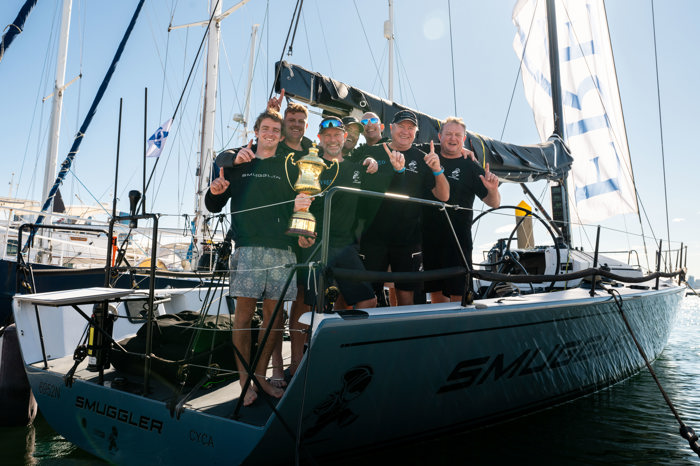
On the water, winning often looks unremarkable. It's not the boat throwing rooster tails past the Heads, it's the crew sailing a clean, mistake free race relative to their own rating, the ones who nailed their sail changes, where the navigator didn't get parked in a hole, and picked the right side of the course. Line honours makes the highlight reel. Corrected time decides the trophy.
/media/3450488/hh_rshyr_performance_ads_970x300px.jpg)